Mostrando las entradas con la etiqueta development. Mostrar todas las entradas

17 de septiembre de 2012

the real reinvention of the newspaper?


This is not about gadgets, apps or another useless social network. It is about transforming the very concept of newspapers, as in, literally, news + paper, in an interactive way.

Interactive newsprint is developing, as they describe it, an interactive paper, a type of "smart" paper:
It is responsive to a human touch – the images or text printed on it can change, or play a sound once a certain area on the surface is pressed. This means that sheets of paper can turn into interactive displays.
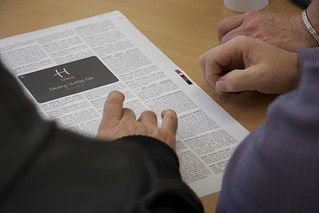
Photo: by InteractiveNewsPrint
Furthermore, this project is researching and focusing its development based on community interests' platforms, as an alternative to the technology companies orientation.

A fantastic way of exploring the reinvention of the newspaper, an alternative bringing new ideas to the world of news and Media.

Let's see what comes up out of it.


14 de abril de 2012

Desarrollo [in]sostenible ¦ [un]sustainable development


Publicado desde Ubuntu. Usa y difunde el Software Libre

27 de febrero de 2012

Latin America & the Baltics, a common interest agenda?


Latin America - Baltics
Is there a common interest agenda between [some] Latin American countries and the Baltics?

I began to deal with this question by exploring alternatives and proposing three starting points on my first post at the Latvian Institute of Foreign Affairs (www.liia.lv).

I suggest that democratic governability, participation and accountability experiences can be rewarding in both regions as democratic processes are recent -two or three decades ago-, there are strong civil commitment toward enhancing democracy, but also a number of unsolved issues undermining a constructive democratic governance.

Western European and Nordic countries have supported both processes of democratisation. It would be rather interesting to bridge this two regions from comparative and analytical and evaluation points of view.