Mostrando las entradas con la etiqueta english. Mostrar todas las entradas

20 de julio de 2014

Piketty's Capital in 3 minutes


Al last. I've bought Piketty's Capital in the Twenty-First Century in latest trip to Mexico, the book "everyone" is talking about. Sadly, it is not yet available in Spanish -apparently its translation will be ready in September.

The are a number of reviews you may find useful or explanatory, I personally liked The Guardian's one, precisely because is referring to the impact, particularly in the US , the UK, and rest of Europe, of one book on economics in the public opinion, something very, very, unlike to happen.

I began my reading with one curiosity. Is about capital, of course, and inequality as both historic and economic practices' consequences. Nevertheless, Piketty is clearly stating is not interested in "denouncing capitalism or inequality per se" which immediate rise questions of ideological standings. Promising reading indeed.

For those opting the "fast-track" approach: Piketty's 'Capital' in 3 minutes:  


26 de enero de 2014

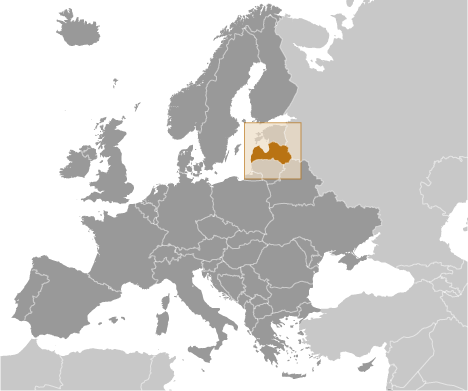
My time in Latvia | second part


This is the second part of this recount (check the first part out). A text about thoughts, ideas and observations after almost two years in Latvia about to finish.

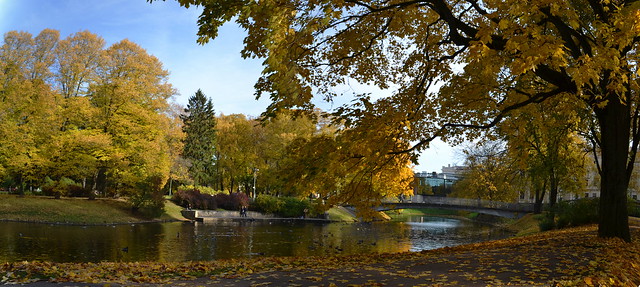
Latvians have a particular and admirable close relationship with nature and what they call pagan costumes and traditions. They daily life is still well connected to nature cycles and there is wisdom on it I conspired something to keep learning from. The use of some herbs, different types of honey or the amazing skills for mushrooming are only some few examples.

There are two interesting healthy habits in the Latvian society I always stress.

Firstly, the nutritional diversity in Latvia is still connected to the weather cycles: lots of berries in autumn, rich in calories and carbohydrates during winter, fresh vegetables during spring and summer. 

Secondly, you will rarely see overweight people. In spite of the heavy consumption of potatoes and bread (and beer), people in the Baltic region is very active, they walk a lot (even during the heavy winter) and spend many hours gardening or practising outdoor sports year round (and yes, in winter as well).

Albeit the size of the country barely over 2 million inhabitants, you will always see Latvian teams in the summer or winter Olympics performing well.

On the other hand, two unavoidable topics I will sum up in one line each: weather and food.

It can always get colder, winter last 6 months, it rains more than in the UK but summer and autumn are lovely.

Apart of a very few exceptions, Latvian food is something I won't miss, at all.


Soviet legacy is as alive as denied. I am not intending to enter the muddy ground of politics, every society lives on contradictions though I believe Latvia must come to terms with its recent history and get over the confrontational narrative, however it was very tough to deal with enclosed minds, people unwilling to challenge inequalities boost by the new elite blinding the public opinion with market-based smokescreens.

The protection of Latvian language is in many of the cases a discursive weak argument. Such argument, is fuelling an ethnic-based and segregating approach State that sooner or later with show deeper cracks.

Around 1.3 million people speak the language yet there is no incentives to learn it, no concrete benefits for non-Russian foreigners. Conversely, it is easier and cheaper to learn Russian that Latvian in Riga, where most of Western foreigners are concentrated.

I genuinely think further debate must come from society on this issue under the umbrella of the real need of attracting migration in the next decades. I remain puzzled of whether Latvia's government truly wants foreigners to learn the language and boost a multicultural society or is rather everything about foreign investment and money.

Thus, I finish these two posts recalling my childhood. I see myself more than two decades ago holding an universal atlas book and "discovering the new States" emerging from the USSR. I was attracted by that rare red in the flag and the intense sight of the blonde couple appeared on the picture. I never thought I would spend unforgettable moments there.

I will always keep in my heart the intense colours on the Latvian landscape, I will always admire Latvians taste and their close connection to the nature, while I will advocate from the distance for further social cohesion and better days for their people, somehow my people too.


6 de enero de 2014

My time in Latvia | first part


Two years in Latvia and it's time to leave.

I must confess, the Baltic region was never among my first choices yet I spent, on and off, around 18 months in this corner of Northern Europe.

There is a lot to say, however I share some thoughts, a few peculiar things I spotted, those lessons learnt, and ideas I think is worth commenting after being truly an alien in Latvia

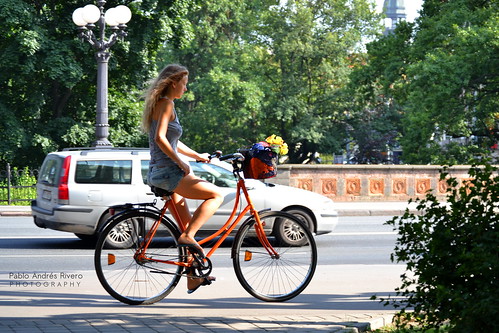
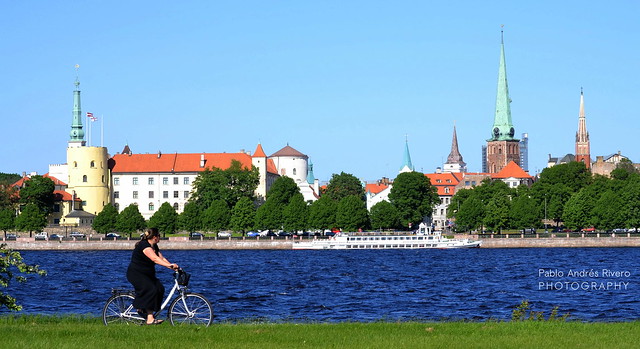
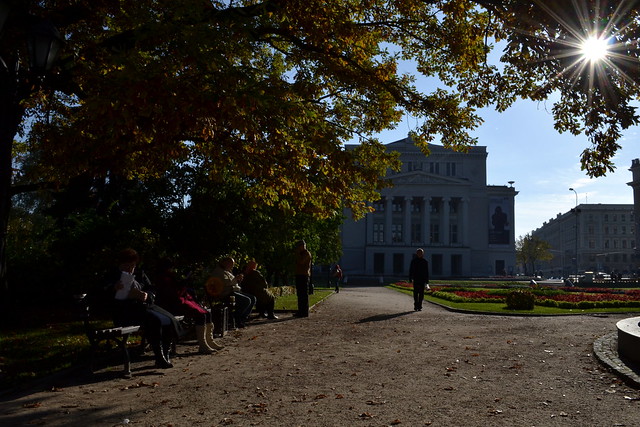
Most of that time I was based in Riga, a wonderful place I walked and enjoyed a lot. Although a large city for the Baltic region, Riga is a medium size European capital with an amazing heritage, very clean and safe, well organized and tidy transport system, vivid yet not chaotic, and full of cultural events year round. It remains a lot to discover, a great invitation to come back in the future.

While in Riga, I experienced a rather different cosmopolitan environment than in any other European capital: Georgian wines, Caucasian and Central-Asia cuisine, strong Russian influence and the best of Latvian deco skills. 

Latvians have an amazing touch for decoration, gardening, flowering and all sorts of set ups. Most of small cafés, shops, squares, parks, gardens, malls or shopping centres are carefully decorated and well kept. It has also been transferred to web and graphic design. 

Good taste is also expressed on women clothing. Although there are not many boutiques and certainly Latvia cannot be compare to the income in the rest of Europe, Latvian ladies are often very well dressed (unlike men), something that for sure contributes to the fact that there is more-than-usual pretty women in Latvia.

The people in the Baltic Region are frequently not talkative, quite bitter to Southern mentality, and living in a sort of protecting circle away from other mortals. I heard a lot of "reasons" such as lack of sun, long-last individual culture, Soviet brainwash, great respect for others' space, collective shyness, and even a growing distrust of foreigners. 

I genuinely believe now is a mix of most of the above.

Yet all that social distance has its interesting effect, a lot of time to think and enjoy your own space, and this is even applicable to the public transport, parks, beaches, bars, cafés, restaurants, etc.

There is, however, a social feature has troubled me all along this time, the different understanding of community and togetherness, the collective distance from others' needs, this frequent ice block filter. I do understand, history has played harshly and it seems that Latvians have developed a strong sense of self-protection, particularly against foreigners, yet it appeared often to me as disrespectful and careless.

Nature, the Soviet past, my disaffections and some things I will keep in my heart from this land on the second part of this story.


16 de julio de 2013

La Paz, unique place [amazing VIDEO]


La Paz, my town, is a chaotic, nocturne, contradictory, constantly celebrating something, constantly dynamic, unfinished... place. La Paz, is a unique place.

If you wonder what it looks like, do not miss the following [AMAZING] video:


24 de mayo de 2013

GVers meeting in Georgia


April was a very exciting month. It began for me in Latvia, later an amazing trip to Georgia, and finally an unexpected return to Bolivia! All for good.

We met wonderful people in Georgia. Our hosts made us feel like part of their own family. They also showed us Georgian customs, talked a lot about their history, took us all around and, of course, treated us with amazing food.

In the streets, Georgians seem to be naturally very friendly, eager to talk to foreigners (when common language is found), and curious about where you come from (rising eyebrows and surprised faces when I said "from Bolivia").

Mirian and I in Tbilisi
I had also the chance to meet in Georgia Mirian Jugheli, a Global Voices colleague. We didn't know each other, we exchanged a few emails prior arrival, after which he kindly showed my wife and I around unusual places in Tbilisi.

We had an enjoyable conversation about many topics: the complexity of issues in Georgia and the Caucasus, the future scenarios for internal displaced people from Abkhazians like himself, the perspectives of journalism and digital activism in the world, and the political shifts/stagnations in Latin America.

Meeting Mirian refreshed the relevance of being part of Global Voices. It is not only about sharing views and commitments, but also making yourself truly feel as part of a global village. Wherever you go, no matter how far it may be, you may find peers.

2 de abril de 2013

Manuel Castells: the emergence of modern political movements


I suggest you this concise and categoric observation by professor Manuel Castells on how modern "political movements", the new kind of a social movement, are emerging on a close relationship between the urban and the cyberspace.


13 de marzo de 2013

Online Communication: Critical Aspects for Management and Organisational Behaviour [Lecture]


It was a great pleasure to visit this morning the Riga Business School and delivered a guest lecture for BBA students. I addressed Online Communication: Critical Aspects for Management and Organisational Behaviour.

My aim was to introduce and to discuss basic concepts of communication for management and organisational behaviour from the "Online" perspective. As discussed with students, the possibilities on the digital era and the network society are now wider and faster, exciting indeed, but also more complex and challenging, with a number of new scenarios and actors to be taken into account.

Strategic planning, monitoring, researching, internal and external considerations, an adequate reading of the culture, language, meanings and different non-verbal elements, are crucial to successfully communicate.

I share below the presentation and the lecture's reference for students and readers to go further.

Sincere thanks to Dr. Claudio Rivera who invited me to deliver this guest lecture. I look forward to meeting you all in the near future. Feel free to comment and use this material for academic or learning purposes.


References 

  • Aquinas, P. (2007). Principles of Management and Organisational Behaviour. New Delhi: Bharathiar University Press. 
  • Castells, M. (2009). Communication Power. Oxford: Oxford University Press. 
  • Everett, A. (2003). New Media, Theories and Practices of Digitextuality. London: Routledge.
  • Gillis, T. (Ed.) (2011). The IABC Handbook of Organizational Communication. 2nd Edition. San Francisco: Jossey Bass – IABC. 
  • Ibrahim, Y. (2010). “The Breastfeeding Controversy and Facebook: Politicization of Image, Privacy and Protest” in International Journal of E-Politics, 1(2): 16-28. 
  • Kellner, D. (2008). Globalization, Technopolitics and Revolution http://www.gseis.ucla.edu/faculty/kellner/kellner.html (last retrieved 12/03/2013). 
  • McQuail, D. (2010). Mass Communication Theory (6th Edition). London: Sage. 
  • Miller, V. (2011). Understanding Digital Culture. London: Sage.


8 de enero de 2013

Pending issues on the Bolivia's latest coca Policy


Al Jazeera has dedicated a 25-minute programme praising Bolivia's latest coca eradication policy.

Further down on this post you can watch Inside Story Americas panel emphasizing the apparent success of the new approach under Evo Morales administration, as in opposed to the United States narcotic policies in the Region.

Latest results, acknowledged by both the US Government and the United Nations, are showing a reduction of coca crops of 12% in Bolivia (2011). This coca plantations' reduction is also achieved under the so-called concerted programme (importantly to stress non-violent intervention), and the social involvement by coca growers in a form of self policing.


Early results reported are outstanding indeed considering that during previous Governments the coca eradication strategies had brought conflict and violence, frequently sponsored by the failed US narcotic intervention through the DEA.

It is also positive to stress that coca-zero approach is acknowledged by international stakeholders as non-viable in the Andean Region, not only due to cultural and legal consumption but also as a consequence of complex (legal and illegal) market relations.

Bolivia's new model seem to be effective in the short-run, at least according to the first report.

The model, however, is quite unique as the social, cultural, economic and political relations are not the same in neighbouring countries or Colombia (not to mention elsewhere in the world), and hardly could be replicated elsewhere.

Furthermore, there are fundamental issues yet not tackled in order to claim a certain degree of success:
  • Coca-growing reduction does not necessarily mean a decrease on cocaine production.
  • Cocaine transit from Peru is becoming another strategic feature of Bolivia's territory in the illegal global cocaine flux.
  • The study on traditional and local consumption of coca has yet not been published and there are direct stakeholders (like cocaleros themselves) involved in adjusting data.
  • What is the impact  of the traditional demand of coca beyond Bolivia's borders, particularly Northern Argentina and some neighbouring regions in Peru?
  • It should be clearly specified the difference in terms of production, demand, quality, consumption, environmental impact and also distribution between traditional areas (mainly in Yungas of La Paz), transitional areas (such as Chapare) and illegal areas (currently expanding over National Parks).

11 de noviembre de 2012

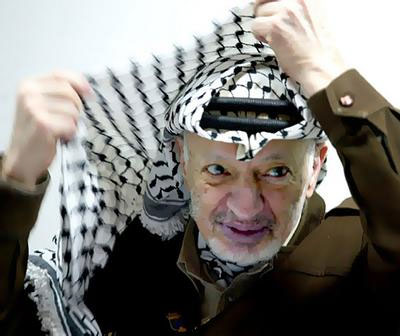
What [and who] killed Arafat?


8 years ago died Yasser Arafat, the Palestine Liberation Organisation (PLO) leader, and President of the Palestinian National Authority (PNA). The cause of dead remains unknown while an international investigation is announced.

A few moths ago, an Al Jazeera documentary attempted to unveil What killed Arafat?


8 de noviembre de 2012

Is it a good business for Latvia investing in Latin America?


Latvian Foreign Minister Edgars Rinkevics seems to think it is.

According to local news, an informative report is being prepared to feed the forthcoming evaluation of Latvia's diplomatic representations, and define the diplomatic development plans until 2020. 

It is envisaged that Latvia will seek to enlarge economic and political relations outside of the EU, especially in India, South East Asia and Latin America. Within that framework, the Foreign Ministry is formally carrying out all of the preparatory work in order to open a new diplomatic mission in Brazil in the short term. 

The following lines will narrow down attention toward Latin America briefly addressing the current economic and political context, as well as the issues and challenges Latvia should take into account in order to build a strategic roadmap that benefits its economic, political, social and cultural agenda.


13 de octubre de 2012

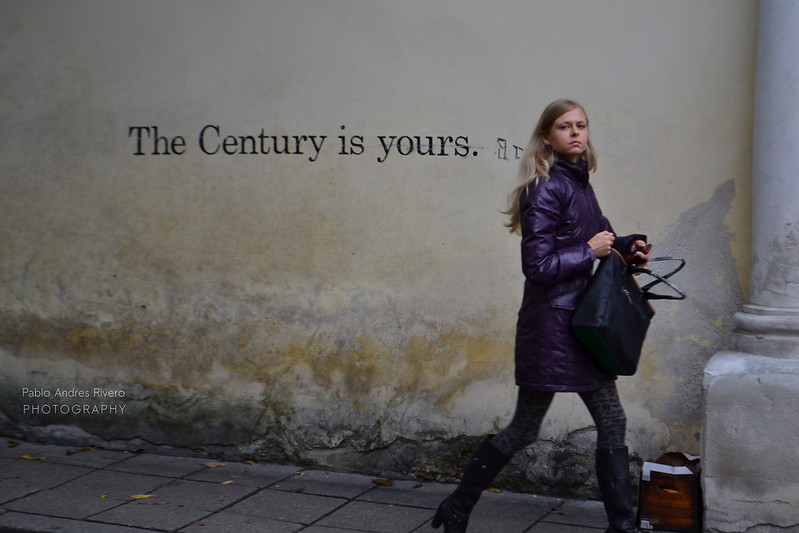
The Century...


"The Century is yours". Seen in early autumn, in the streets of Tallinn, Estonia.
"El Siglo es suyo". Visto al principio del otoño, en las calles de Tallin, Estonia.

17 de septiembre de 2012

the real reinvention of the newspaper?


This is not about gadgets, apps or another useless social network. It is about transforming the very concept of newspapers, as in, literally, news + paper, in an interactive way.

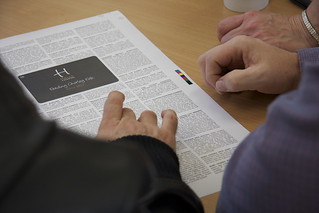
Interactive newsprint is developing, as they describe it, an interactive paper, a type of "smart" paper:
It is responsive to a human touch – the images or text printed on it can change, or play a sound once a certain area on the surface is pressed. This means that sheets of paper can turn into interactive displays.
Photo: by InteractiveNewsPrint
Furthermore, this project is researching and focusing its development based on community interests' platforms, as an alternative to the technology companies orientation.

A fantastic way of exploring the reinvention of the newspaper, an alternative bringing new ideas to the world of news and Media.

Let's see what comes up out of it.


14 de septiembre de 2012

#Socialmedia


A slap in the face          |           Una cachetada en la cara


30 de agosto de 2012

"Uranium" | the latest play by Bolivia's government

Bolivian minister of Government, for sure one of the top five most up-to-date members officials, led on Tue 29th of August a police operative seizing, as he proudly said, 2 tons of uranium, right next to the town centre of La Paz.

Big news!

The minister, vice-minister and advisers quickly manage to calculate de value of such load. 50-million US dollars. Special police units guarding the load. Please take your sits, the show is about to begin! 

No one in the next few hours thought that would be a good idea analyse the radioactivity of the material confiscated first. Impressive.

Photo: @pagina_siete vía Twipic.
International press (at least part of the serious one) was more cautious and probably decided to digg further before buying the cheap tickets offered by Bolivia's ministry of Government.


17 de agosto de 2012

The Last Fishermen, historic and cultural attachments in campaigning

Greenpeace is always one step ahead in terms of both innovation and engagement, as well as action and mobilization.

The UK branch has just launched a new campaign: The Last Fishermen. A fantastic piece of campaign based on media consuming trends, cultural values, a skilful use of the British collective memory and the image of the future.

The front-line of the campaign is a short documentary (embedded below) about fishermen struggling for sustainable fishing as they see no future for the  next generations. But it is not only by watching real people struggling that generates engagement and action. It's about the strong historic and cultural attachment British people (as well as other European nations) have towards sailing and fishing.

So, Greenpeace is calling for action by being a fisherman's friend. The storytelling displayed, culturally activated, aims to adjust the The European Common Fisheries Policy, technicalities affecting sustainable and non-corporate fishing.

I reckon not many people would go through all that, but certainly this campaign could engage many. Have a look at what happens right after you give your support to the campaign. 


4 de julio de 2012

Considerations on Belarus upgraded relations in Latin America


Chávez y Lukashenko, 26th June 2012. CC via Chavezcandanga

Yes, you read the title correctly. Belarus is upgrading strategic relations with some countries in Latin America.

Following Iranian president Mahmoud Ahmadinejad diplomatic strategy, Belarusian president Alexander Lukashenko is paying a five-day official visit to Cuba, Venezuela and Ecuador, three key anti-American players with notorious but not decisive leadership in Latin America.

Official statements released by Belarusian government underline strategic alliances in the areas of agriculture and biotechnology (with Cuba) automotive industry, housing and, of course, oil and gas (with Venezuela and Ecuador). 

Minsk is clearly seeking strategic support outside EU and US area of influence. The ALBA countries, like Cuba and Nicaragua, are welcoming such alternative as a reactivation of the erstwhile political relations and cooperation maintained with the Soviet Union during the second half of the twentieth century. 

27 de junio de 2012

Bolivia: Police Mutiny and political instability

Photo: www.france24.com


Police remains mutinied in Bolivia demanding levelling up their wages to the same amount military officers currently earn. Public figures showed a difference of up to 40% in these two wages.

A new round of negotiations is under-way while Bolivia's cities remain without guard or police assistance for the seventh day.

The government insist that behind the protest is a "right-wing" coup plan. Independent and citizen media reject such allegation.

Further non partisan information using Social Media sources can be found on this Global Voices post.

19 de mayo de 2012

Workshop in Riga: Communication and Engagement


Social networks are not new to humans. They represent an elementary factor of articulation and interaction in society.

Individuals do not succeed by themselves, humans need ultimately to get together in order to act, create or transform realities.

Social Media technologies based on the Internet has given a new meaning to the concept of Social Networks. However, the fact that we can access to information, interact and potentially become part of global-scale actions, does not necessarily imply that we are effectively communicating with peers, partners or those pursuing the same goals or transforming realities.

15 de mayo de 2012

Constitution of the Republic of Užupis


Vilnius, Lithuania's capital, is a fantastic city. It contains a lot of European energy from different sources and angles: A lot of heritage as a result of centuries of rich history, more recent [and needless to say] strong traces of the Soviet era, as well as an attractive personality. Particularly the bohemian Užupis.

The district of Užupis is located right next to Vilnius Old Town. In 1997, Užupis declared its independence. Ever since, they have a government, a flag, an army and, of course, a constitution.

Whether symbolic or not, Užupis offers an environment to see the world in a different perspective. To make sense of what I say, have a look at this group of photos from Užupis and also  this other set from Vilnius.

Furthermore, have a look at the 41-article Constitution of the Republic of Užupis in Vilnius in 77 seconds:


You also can read it on this blog post.

10 de mayo de 2012

Posting for ISN on Security and International Relations


Being part of Global Voices (globalvoicesonline.org) is an amazing experience. As I commented before, It is a fantastic network of bloggers, activists and translators spreading peoples voices around the world.

As a Global Voices author, I was invited to join the Special Series on International Relations & Security, a project resulting from the partnership between Global Voices and the International Relations and Security Network (ISN) in Switzerland, a world-wide renowned Think Tank.

A number of posts will be published on the ISN blog discussing international relations and security issues from the citizen media point of view. 

All posts will be published/translated in/to English, Spanish, French and Arabic. 

I will be mainly posting on Latin America and more precisely on the Andean Region. The first post is "Development at What Cost? New Conflict Over Bolivia’s TIPNIS Road"

As always, comments are most welcome.