Mostrando las entradas con la etiqueta international. Mostrar todas las entradas

28 de marzo de 2013

Covering South America for the Global Voices-ISN partnership


I have been part of a joint project between Global Voices and ISN, a Swiss open-access Think Tank on International Relations and Security, aiming to "explore international relations and security through the lens of people who express themselves in online citizen media" around de world.

Since May 2012, the team of editors and authors has covered dozens of countries on a large number of hot international topics, (the whole list of posts can be reached on this special coverage page).

As you could expect, I focused my post on South America, particularly the Andean region and Bolivia, paying attention to ongoing conflicts and key development issues at this part of the planet.

This is the list of my five published articles out of this partnership.
All of this articles have been primarily translated to French, Spanish and Arabic.

I would like to thank the editors from ISN and Global Voices, as well as my fellow authors for their  assistance and collaboration on this articles. A wonderful experience that I very much look forward to repeating in the future.

8 de noviembre de 2012

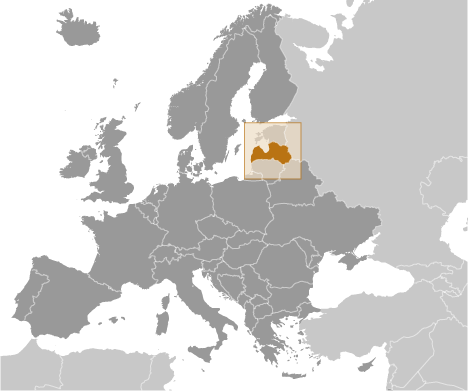
Is it a good business for Latvia investing in Latin America?


Latvian Foreign Minister Edgars Rinkevics seems to think it is.

According to local news, an informative report is being prepared to feed the forthcoming evaluation of Latvia's diplomatic representations, and define the diplomatic development plans until 2020. 

It is envisaged that Latvia will seek to enlarge economic and political relations outside of the EU, especially in India, South East Asia and Latin America. Within that framework, the Foreign Ministry is formally carrying out all of the preparatory work in order to open a new diplomatic mission in Brazil in the short term. 

The following lines will narrow down attention toward Latin America briefly addressing the current economic and political context, as well as the issues and challenges Latvia should take into account in order to build a strategic roadmap that benefits its economic, political, social and cultural agenda.


15 de octubre de 2012

Hugo Chávez's re-election: International implications


Venezuelan president Hugo Chávez has been re-elected on October 7 and will assume his fourth term in power. The opposition leader Henrique Capriles has immediately acknowledged the results, legitimating the electoral outcome.

Official data shows [es] that 55.2% vote for Hugo Chávez and 44.1% supported Henrique Capriles, the United opposition candidate. The total turn out overpass 81%, of the 19-million electorate, being this one of the most attended elections in Venezuela's history.

There is no electoral fraud, intimidation or coercion officially reported so far. Analysts suggest the electoraleffectiveness of Chávez lay on the large amount of cash and resources that the ruling PSUV (Chavez party) uses for continuing political campaigning, the charisma of the leader with a powerful historic and symbolic political narrative, as well as the active social and political structure behind the leadership. 

Also, as Venezuelan analyst Miguel Angel Martinez argues, many people makes a cost-effective calculation wherebyChavez is convenient in the short-run. It is not irrational but rather utilitarian as there are a number of social programmes carried out in the country directly linked to the figure of the leader and the fear of loosing the aid arose as a voting for the ruling regime.

The re-re-re-elected president's first speech was brief, emotive and rather conciliatory. Chávez called to work for a better “revolutionary democratic socialism”, overcoming the polarised political division within the country. Remarkably, Chávez's speech reflects he is aware of the opposition electoral progress and Capriles', a centre-left politician, appears as a key actor in the future. 

Further down I analyse the Regional and international foreign policy implications of Chávez's re-election.

4 de julio de 2012

Considerations on Belarus upgraded relations in Latin America


Chávez y Lukashenko, 26th June 2012. CC via Chavezcandanga

Yes, you read the title correctly. Belarus is upgrading strategic relations with some countries in Latin America.

Following Iranian president Mahmoud Ahmadinejad diplomatic strategy, Belarusian president Alexander Lukashenko is paying a five-day official visit to Cuba, Venezuela and Ecuador, three key anti-American players with notorious but not decisive leadership in Latin America.

Official statements released by Belarusian government underline strategic alliances in the areas of agriculture and biotechnology (with Cuba) automotive industry, housing and, of course, oil and gas (with Venezuela and Ecuador). 

Minsk is clearly seeking strategic support outside EU and US area of influence. The ALBA countries, like Cuba and Nicaragua, are welcoming such alternative as a reactivation of the erstwhile political relations and cooperation maintained with the Soviet Union during the second half of the twentieth century. 

10 de mayo de 2012

Posting for ISN on Security and International Relations


Being part of Global Voices (globalvoicesonline.org) is an amazing experience. As I commented before, It is a fantastic network of bloggers, activists and translators spreading peoples voices around the world.

As a Global Voices author, I was invited to join the Special Series on International Relations & Security, a project resulting from the partnership between Global Voices and the International Relations and Security Network (ISN) in Switzerland, a world-wide renowned Think Tank.

A number of posts will be published on the ISN blog discussing international relations and security issues from the citizen media point of view. 

All posts will be published/translated in/to English, Spanish, French and Arabic. 

I will be mainly posting on Latin America and more precisely on the Andean Region. The first post is "Development at What Cost? New Conflict Over Bolivia’s TIPNIS Road". 

As always, comments are most welcome.


12 de marzo de 2012

LIIA update: Malvinas/Falklands: Beyond the Bilateral Conflict


On a second post for the Latvian Institute of International Affairs (liia.lv) I am discussing the Malvinas/Falklands issue, beyond the bilateral conflict.

I argue that other key players in the Region could be seeking to displace not only British but also NATO control in the South Atlantic, in a new diplomatic and geopolitical chapter for this yet unsolved issue.

This is certainly about the Argentinian's historic vindication, It's also about oil and fishing reserves in the South Atlantic. However, latest events my lead to a rather more complex recomposition of other interests this time supported by Brazil, the consolidated Regional power that may be seeking a leading role not only from an economic but also geopolitical point of view.

Feel free read the full article on http://liia.lv/en/blogs/malvinasfalklands-beyond-the-bilateral-conflict/ and comment.